November 16
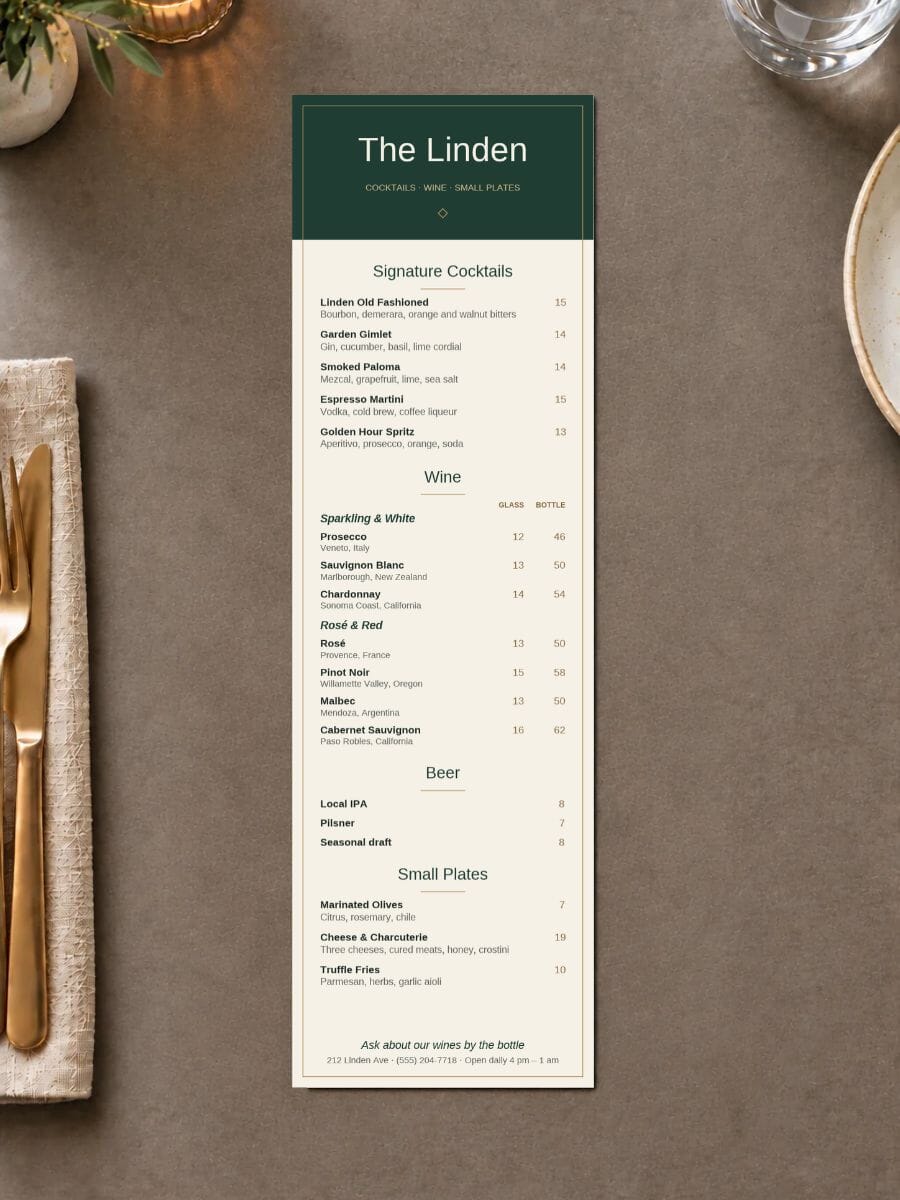
The Linden
Why it works: Five signatures lead the card, and the wine list shows glass and bottle prices side by side by style.
Get this template Free · Opens in Canva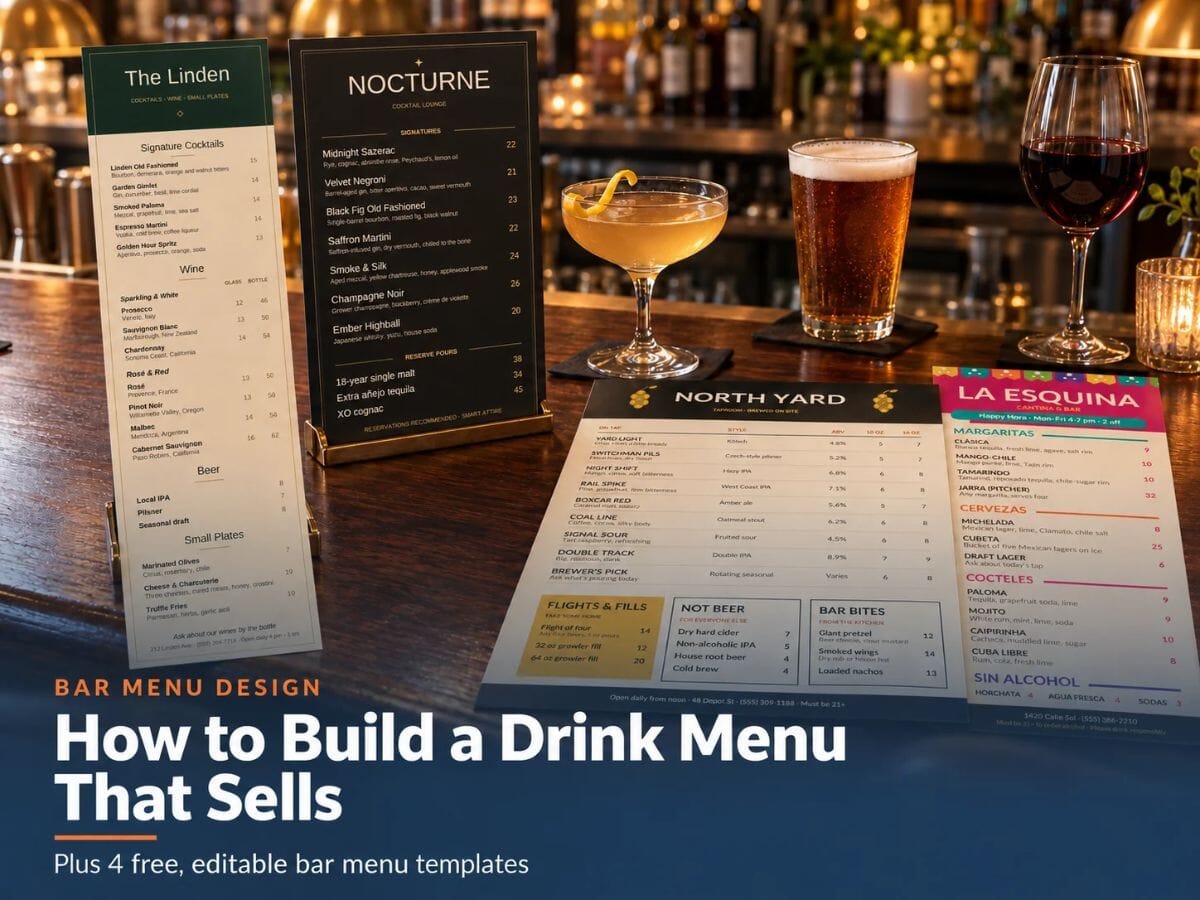
Drinks earn more per dollar than almost anything else you serve, yet the drink menu is often an afterthought. This guide walks through building one that sells, in the order you would build it: the format, what goes on it, how to write and price it, and how to bring guests back for the next round.
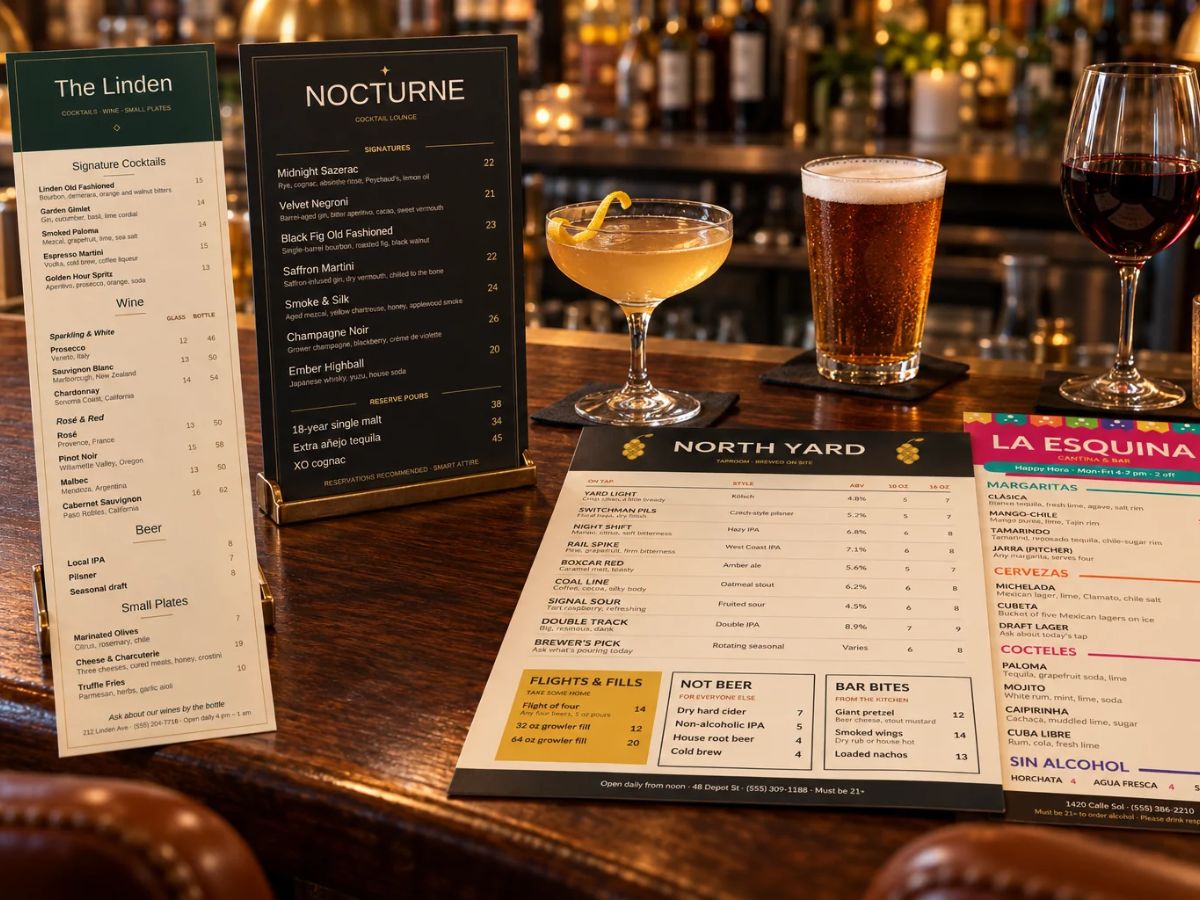
Cocktail cards, a wine list, a taproom beer menu and a sports-bar poster, all part of our free packet of 55 editable menus.
Drinks are among the most profitable things a restaurant sells. Restaurants spend a median of about 32 cents of every sales dollar on food and beverage costs (National Restaurant Association); at the bar, the typical pour cost is closer to 20 cents. Every drink a guest adds to the check carries more margin than the plate beside it.
Yet many drink menus are an afterthought: a list squeezed onto the back page of the food menu. A bar menu that sells works the way guests actually use it. It reaches them where they sit, gives them a short list they can choose from quickly, tells them exactly what each drink is, and gives them a reason to order the next round. The four parts of this guide follow those steps. For the rules that apply to the whole menu, from layout to legal requirements, start with our complete guide to restaurant menu design.
Yes. Keep drinks off the food menu and give them a short list of their own, especially when your food menu is long. A table tent or a standing cocktail list that stays on the table after the meal is cleared keeps another round in front of guests, and laminated card stock, waterproof paper or a clipboard holds up to spills and makes quick updates easy (Toast).
Larger programs often split the list further, with cocktails and spirits on one card and beer and wine on another (The Restaurant HQ). Then size each card for where it will be read, starting with the bar itself.
That strip of bar is narrower than it looks. Bar stools are usually spaced 26–28 inches apart, center to center, so each guest gets a little over two feet of counter for a glass, a plate and the menu (our guide to bar heights and stool spacing). A 4.25-inch tall card fits beside a drink; a letter-size page gets folded, pushed aside or wet. Bar seats are also the densest in the room, at about 8–12 square feet per guest compared with 15–18 for a two-top (our small restaurant layout guide), so on a busy night many guests meet your drink card at the bar rather than at a table.
Once you know the shape of the card and where it will be read, the next question is what fits on it.
Six or seven signature cocktails is a good ceiling. Menu designers cap food sections at seven items (Restaurant365), and Toast suggests six to eight items per section of a drink menu. It is the same limit you use for every section of your food menu: past that, choosing starts to feel like work and guests fall back on a drink they already know.
Spread the list across base spirits, so a guest who only drinks gin or only drinks tequila still finds something (The Restaurant HQ). Then order it the way guests read, with your signature, highest-margin drinks at the top of the list and a strong seller in the last spot.
Cocktails usually lead the card, but most bars also pour beer, and beer works best in a different format.
Give each beer its name, style and ABV, and show the price for each pour size. Popular brands need only the name; for craft beers guests may not know, add the style, the brewery and where it is brewed (The Restaurant HQ).
Beer is one of the few places where price columns work. Guests compare a 10 oz and a 16 oz pour rather than hunting for the cheapest drink, so a neat table of style, ABV and sizes reads faster than prices tucked after each description. Close the list with flights or growler fills if you offer them.
Wine follows the same logic of style and size, with one more decision for the guest: a glass or the whole bottle.
Group wines by style, such as sparkling and white, then rosé and red, and give each one its grape, region and country (The Restaurant HQ). Show glass and bottle prices in two columns, so guests can see the value of a bottle at a glance.
Keep the by-the-glass list short and familiar: a few varietals guests know, at a range of prices. Longer bottle lists belong in their own booklet or a separate page.
One more group belongs on the card, and it is growing: guests who aren’t drinking alcohol at all.
Yes, and they deserve the same care as your cocktails. Only 54% of US adults now say they drink alcohol, the lowest share Gallup has recorded, and among young adults the share fell from 59% in 2023 to 50% in 2025 (Gallup).
Give nonalcoholic drinks their own short section with real descriptions: a house soda, an agua fresca, a zero-proof cocktail or a nonalcoholic beer. Guests who aren’t drinking still want something to order, and a dedicated section shows them it was planned for them, not added as an afterthought.
With the lineup set, the work shifts from what you pour to how you present it: the words and the prices.
Name the base spirit first, then two or three key ingredients, in 15 words or fewer, the same limit menu designers set for dish descriptions (Gordon Food Service). Guests pick drinks by spirit and flavor, so a clear ingredient line sells better than a clever story:
Creative drink names are fine, as long as the ingredient line underneath tells guests what they are ordering. Once guests know what each drink is, the price is the last thing they weigh.
Price each drink from its pour cost: the cost of the ingredients divided by the menu price. Most bars run a total pour cost of about 18–24%, with medians near 15% for spirits, 24% for beer and 28% for wine (BevSpot).
For wine by the glass, a common rule of thumb is to price one glass at about the wholesale cost of the whole bottle, so the first glass pays for it (BevSpot). Then present prices the same way as on your food menu: whole numbers with no dollar sign, after the description. In a Cornell study, diners whose menus had no dollar signs spent more. Glass and bottle prices and beer pour sizes are the exceptions, where neat columns help guests compare.
A well-written, well-priced list wins the first order. The last part is about the second.
State the days, hours and discount in one line, then list only the drinks and small plates that are part of it. A band across the top of your drink card works for a simple deal; a separate half-letter card works when happy hour has its own food.
Check the rules before you print. Several US states ban happy hour drink discounts outright, and others limit the hours or how deep a discount can go (VinePair). Your state’s alcohol beverage control board has the current rules.
Happy hour brings guests in. Whether they stay for another round depends less on the menu than on the seat they are sitting in.
Guests order another round when they are comfortable enough to stay, and at the bar, comfort comes down to fit. Across the more than 35,000 restaurants, bars and hospitality spaces we have furnished, that lesson holds every time. The seat should sit 10–12 inches below the underside of the counter: about 28–30 inches for a standard 42-inch bar and 24–26 inches for a 36-inch counter. A footrest 8–10 inches below the seat keeps longer visits comfortable (our guide to bar heights covers the full range, including tapas-height bars).
Measure your counter before you order, then explore Superior Seating’s restaurant bar stools in wood and metal, with backs for long stays, and our booths for groups.
Give drinks their own short card sized for where it is read, build a lineup with something for every guest, describe and price each drink clearly, and make the bar a place guests want to stay for the next round.
The fastest way to put all four parts into practice is to start from a menu that already follows them. Open one of these templates from our free packet in Canva, swap in your drinks and prices, and print:
Why it works: Five signatures lead the card, and the wine list shows glass and bottle prices side by side by style.
Get this template Free · Opens in Canva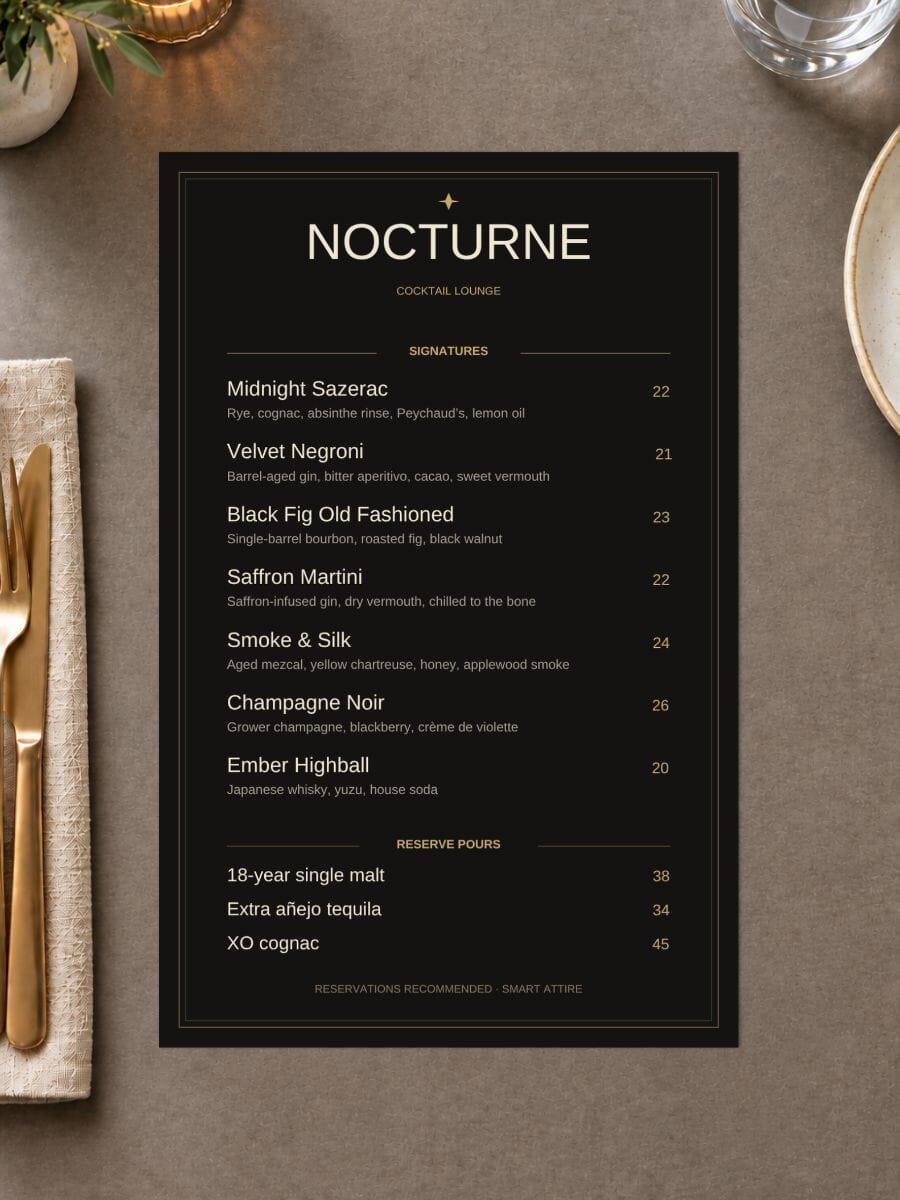
Why it works: Built for a dim lounge: seven signatures first, then reserve pours priced in a short list of their own.
Get this template Free · Opens in Canva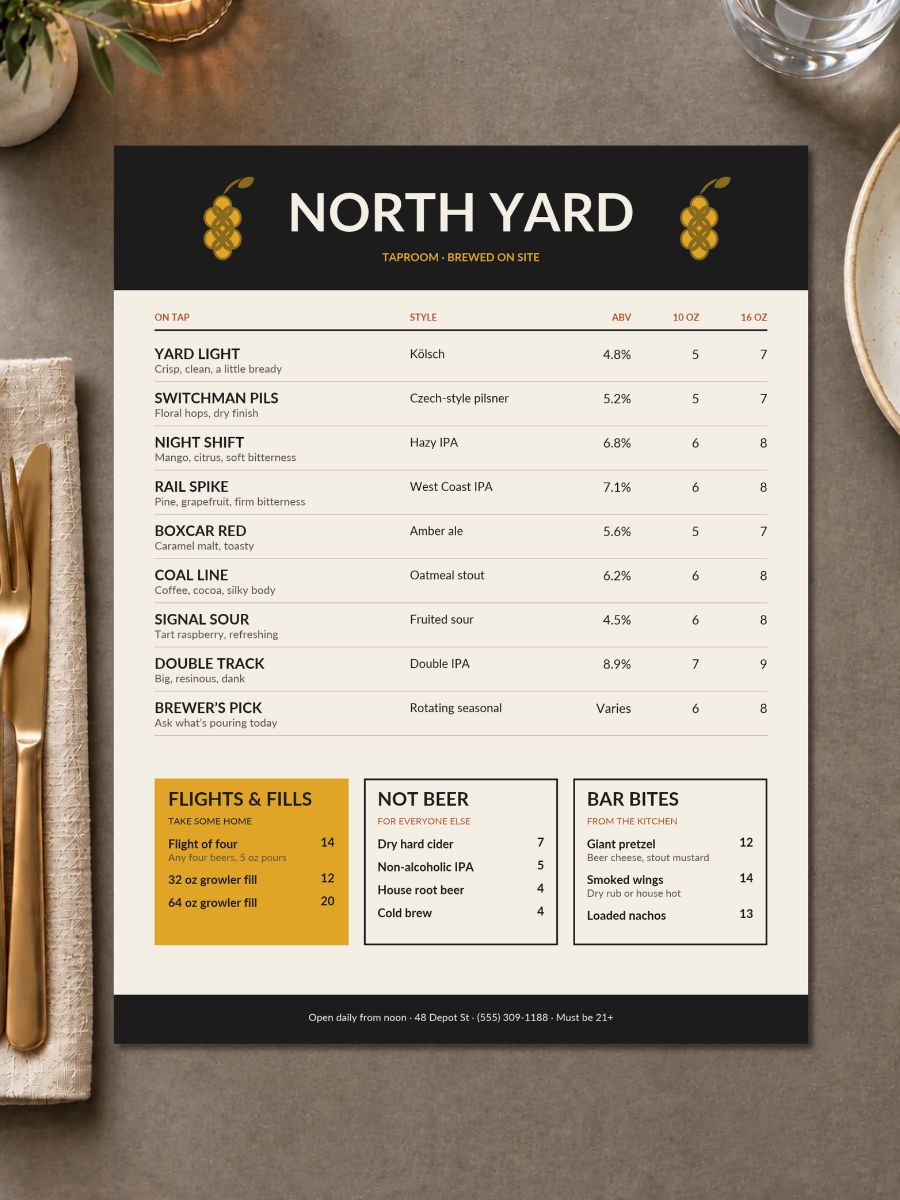
Why it works: Style, ABV and two pour sizes for every beer, plus flights, growler fills and a “Not beer” list.
Get this template Free · Opens in Canva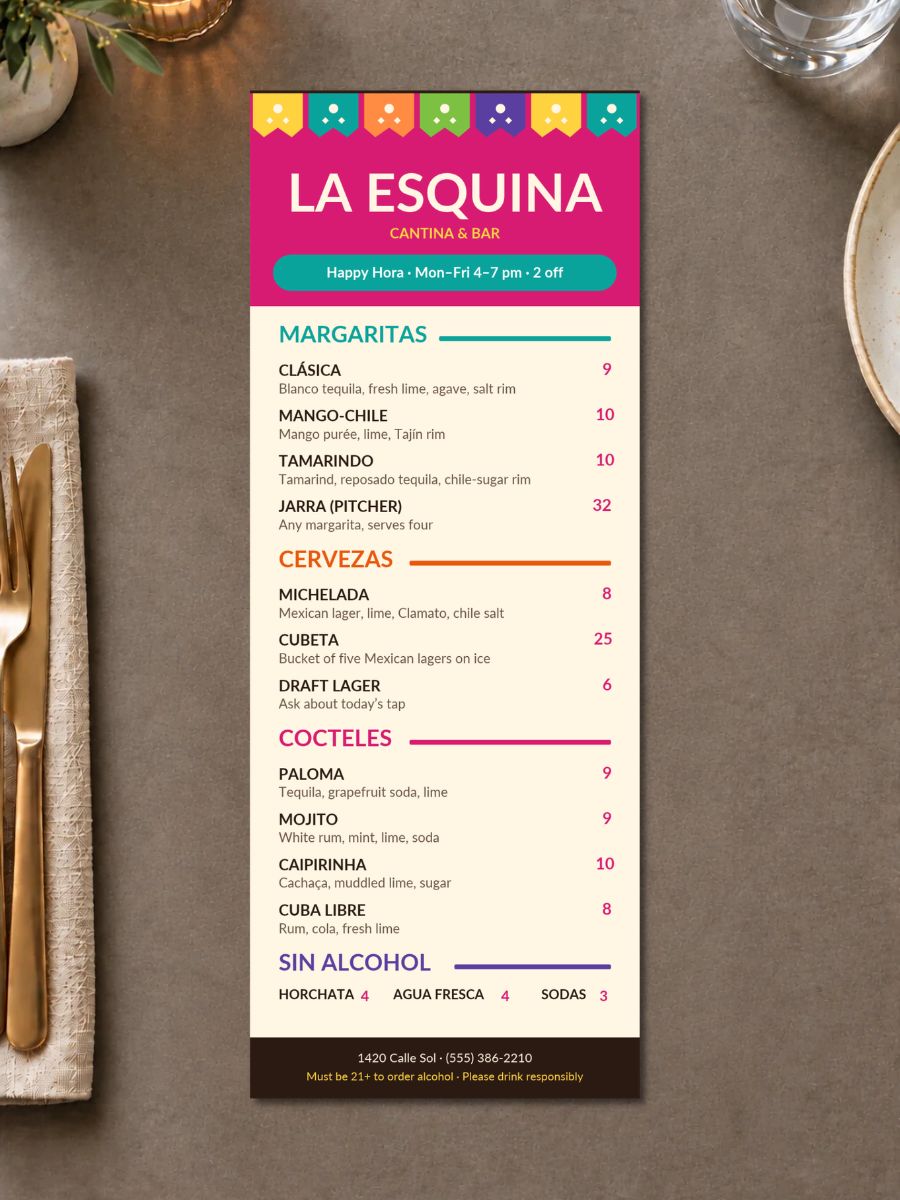
Why it works: Happy hour sits in one line at the top, and a Sin Alcohol section closes the card for guests who aren’t drinking.
Get this template Free · Opens in CanvaThe same packet includes a sports-bar poster with game-day specials, plus food, dessert and kids’ menus to match, so your drink card and your food menu share the same look. For the rest of the menu, from layout to sizes and legal requirements, see our complete guide to restaurant menu design.
Cocktail cards, a wine list, a taproom board and a sports-bar poster, plus food, dessert and kids’ menus. Ready to edit in Canva. No email required.