November 16
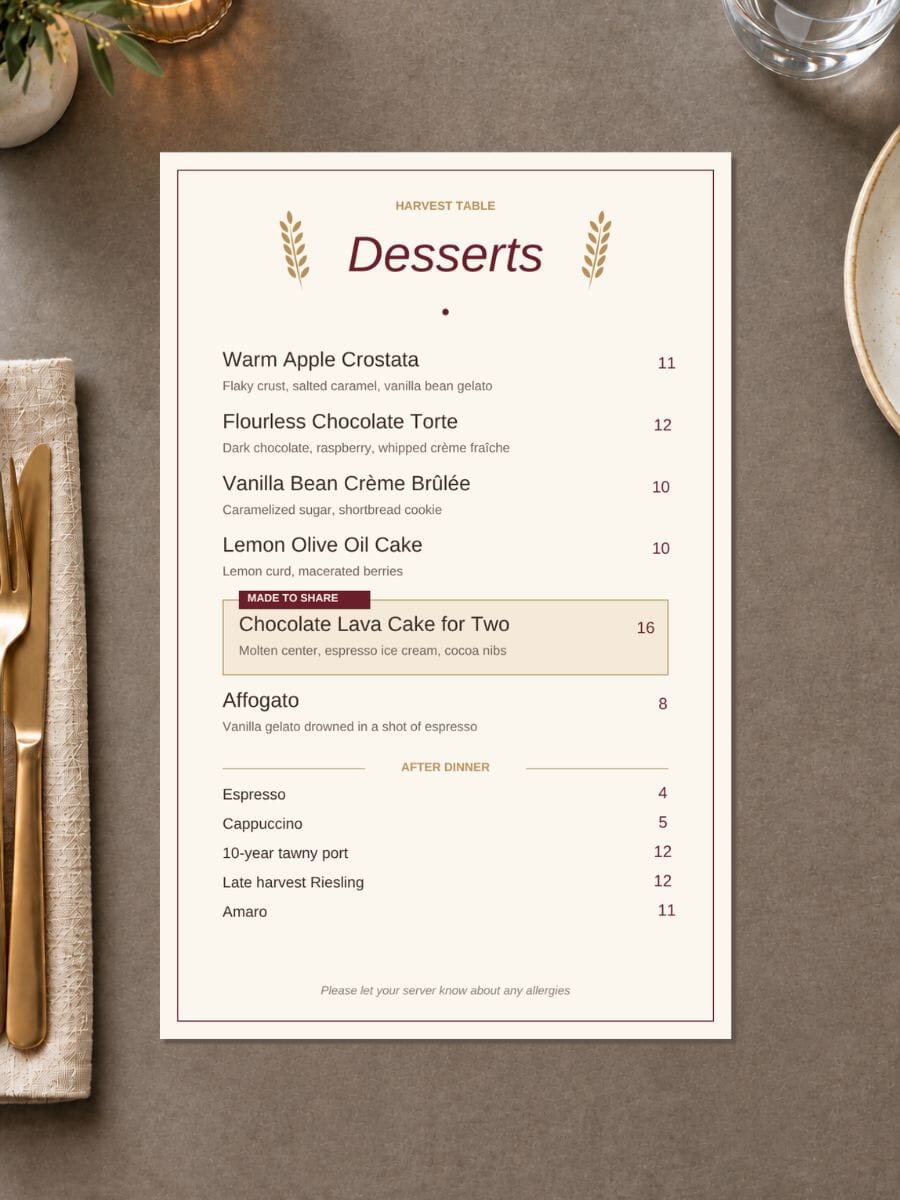
Harvest Table Desserts
Why it works: Five desserts, a lava cake for two and a short after-dinner list of coffee, port and amaro, all on one card.
Get this template Free · Opens in Canva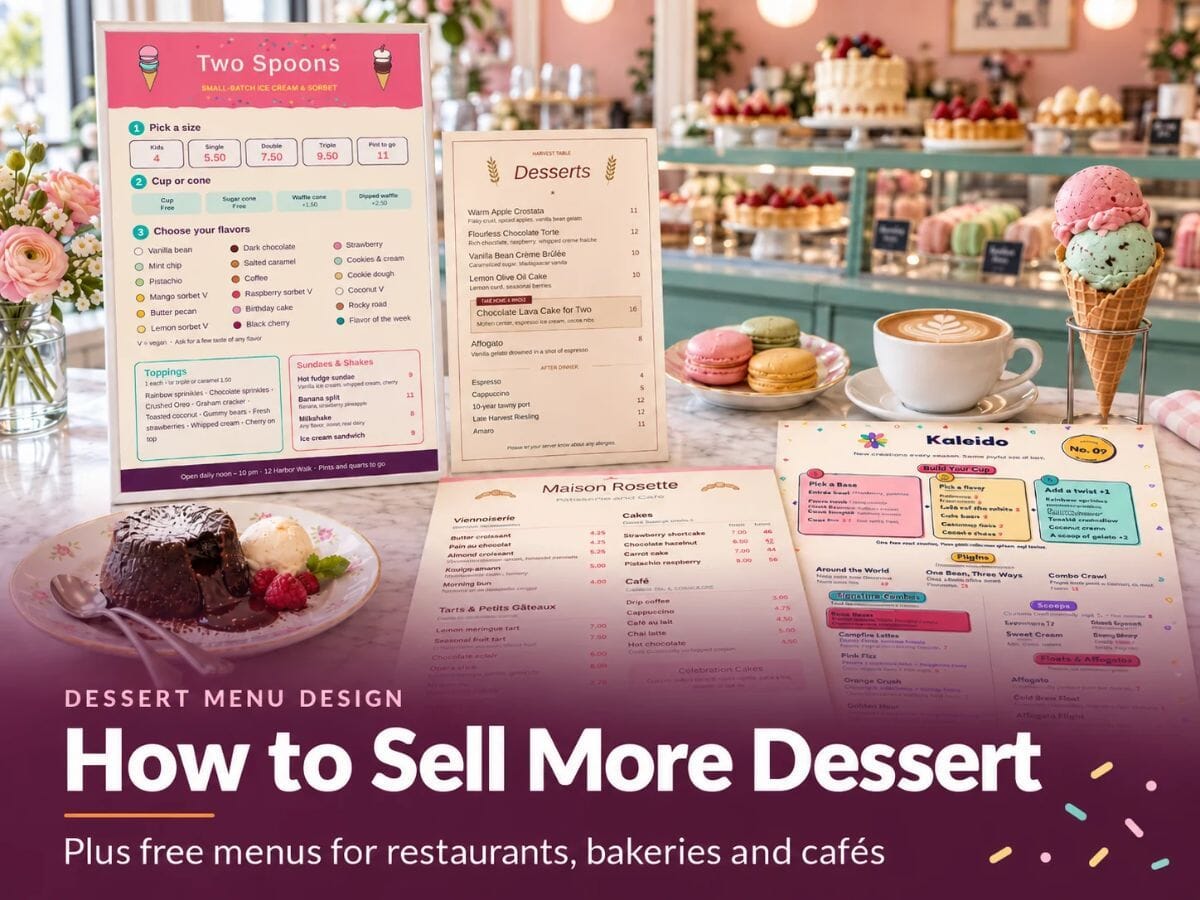
In a restaurant, most dessert decisions happen at the end of the meal, when guests are full and the check is in sight. At a bakery, pâtisserie, café or ice cream shop, they happen in seconds, in line at the counter. This guide shows how to design a dessert menu for both: when guests should see it, which desserts to feature, how to write and price them, and how to bring guests back for more.
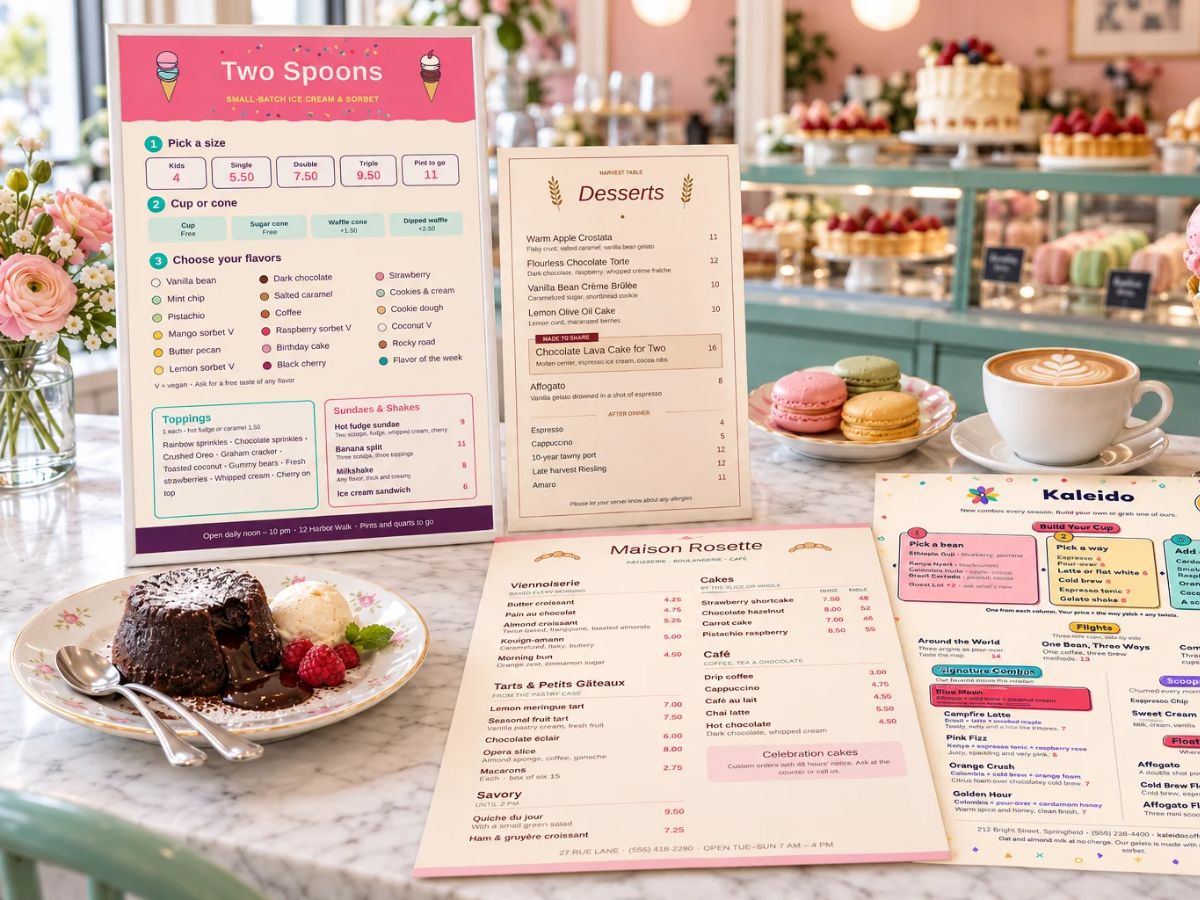
A restaurant dessert card, a pâtisserie menu, an ice cream shop poster and more, all part of our free packet of 55 editable menus.
Because most dessert sales are won or lost before the dessert menu ever arrives. By the end of the meal, guests are full, the check is in sight and saying no is easy. A quarter of consumers only order dessert at a restaurant if someone else in their party does too (Technomic, via Restaurant Business), so one guest’s “I’m stuffed” can end the conversation for the whole table.
Good dessert menu design changes the timing and lowers the barrier. It puts dessert in front of guests early enough to plan for it, offers something easy to say yes to, like a dessert to share or a small portion, and turns the end of the meal into a reason to stay.
Bakeries, pâtisseries, cafés and ice cream shops face a different version of the same problem. Dessert is the whole menu, the list is long, and guests decide in the few seconds they spend in line. The same principles apply, so each part of this guide covers both: the restaurant dessert card and the counter menu. The four parts follow the steps above. For the rules that apply to the whole menu, from layout to legal notes, start with our complete guide to restaurant menu design.
Twice: once before they order, and again when plates are cleared. Restaurant Business recommends telling guests about signature desserts before they order their meal, for example by placing the dessert menu on top of the regular menu so it is the first thing they see.
Seeing dessert early changes how guests plan the meal. In a 2019 study published by the American Psychological Association, cafeteria diners who chose an indulgent dessert first went on to pick lighter main dishes, while the effect disappeared when dessert came last. A guest who knows the chocolate torte is waiting may skip the extra side and leave room for it.
At a bakery, café or ice cream shop, the menu does its work in line instead. Guests read it while they wait, so a board or poster readable from where they stand, next to a pastry case that shows the real thing, lets them decide before they reach the register.
In a restaurant, the second look comes at the end of the meal, when the server clears the plates and brings the card back, ideally alongside coffee and after-dinner drinks. That raises the next question: what the guest should be holding when that moment comes.
In most sit-down restaurants, yes. A small dessert card does a job the main menu can’t: it can sit on the table from the start of the meal, then come back on its own at the end, without asking guests to reread the whole menu. A half-letter card is a common size, and it leaves room for a short list of coffee and after-dinner drinks at the bottom.
Dessert shops, bakeries and ice cream counters are the exception, because dessert is the whole menu. There, the job is helping guests choose quickly from a longer list, so a full-page menu or a counter poster readable from the line works better than a card.
Once you know how guests will see your desserts, the next step is deciding which ones make the list.
Keep it short. Seven items is the usual ceiling for any section of a menu (Restaurant365), and most restaurant dessert cards need fewer. A short list is easier to decide from when guests are already full, and it keeps your pastry station focused.
Cover a few different cravings rather than several versions of one. A typical balanced card includes a chocolate dessert, a fruit or citrus dessert, a classic like crème brûlée, something light and one dessert made to share. Our Harvest Table template, for example, lists six desserts with exactly that spread.
Bakeries and dessert shops naturally carry longer menus, so apply the seven-item limit to each section rather than to the whole menu. Group items the way guests shop: by category, like the viennoiserie, tarts and cakes on our Maison Rosette pâtisserie template, or by steps, like the size, cup or cone, then flavors on our Two Spoons Creamery poster.
A short list also makes it easier to give each dessert a role, and the most useful roles are the ones that make ordering easy.
Feature the desserts that lower the barrier to saying yes. These do that especially well:
With the list chosen, the work shifts to how each dessert reads and what it costs.
Describe what the dessert is like to eat: the texture, the temperature and the contrast, in 15 words or fewer, the same limit our menu design guide recommends for every dish. Guests choosing dessert are not hungry anymore, so the description has to make them want it anyway:
Words like warm, molten, crisp and chilled do the selling. For a dessert made to share, say so in the name or a small label, so guests don’t have to ask. Once guests can picture the dessert, the price has to make it an easy yes.
Start from food cost, the same way you price the rest of the menu: what each dessert costs to make, divided by its menu price. Our guide to menu pricing walks through the math and the 28–35% food cost range most restaurants aim for.
Then price shareable desserts on purpose. Set a dessert for two above any single dessert but below the cost of two, so the table spends more than it would on one dessert and sharing still feels like a good deal.
Show dessert prices the same way as on your main menu: whole numbers after the description, with no dollar sign. Bakeries and counter shops are the exception: prices with cents and clear size or quantity prices, like a single scoop, a double and a pint to go, help guests order fast. A box price set below the cost of buying each item separately, such as six macarons for 15 instead of 2.75 each, nudges guests toward the larger order. A well-written, well-priced card makes dessert easy to order. The last part is about the moment it gets ordered.
Make dessert part of a reason to stay. Put coffee, espresso and a few after-dinner drinks like port or amaro at the bottom of the dessert card, so guests who decline dessert still have something to order, and those who say yes have something to pair it with.
Restaurant Business suggests three more moves: have servers suggest sharing a dessert the way they suggest sharing appetizers, offer to box a dessert to take home, and consider an afternoon dessert special. That last one has room to grow. Nearly half of consumers say their last dessert was an afternoon or late-night snack, yet only about one in ten operators see their highest dessert sales at those times (Datassential).
For cafés, bakeries and ice cream shops, that afternoon and evening traffic is the main event. Pairing desserts with coffee, offering pints and pastry boxes to go, and keeping a flavor or pastry of the week on the board all give regulars a reason to come back.
Whether guests stay for dessert, though, often depends less on the menu than on the room around them.
Guests order dessert when they are comfortable enough to linger. Across the more than 35,000 restaurants, bars and hospitality spaces we have furnished, the seats where guests stay longest are the comfortable ones: booths and banquettes along the walls encourage longer stays (our small restaurant layout guide), and in our experience, a chair with good back support keeps a long dinner comfortable to the end.
Table size matters too. A shared dessert, two coffees and a dessert card need room, and a 24-inch café two-top fills up fast; a 30-inch square table gives the end of the meal space to breathe. When you plan the room, explore Superior Seating’s restaurant booths, commercial dining chairs and restaurant tables.
Dessert shops need a different room: a quick-moving counter and a few places to linger. Small café tables and chairs, plus a few bar stools at the counter, let guests stay for a coffee and a pastry without slowing the line. For an example of a café we furnished, see our Honey Berry Café case study.
Show dessert before guests order, keep the list short and easy to say yes to, describe and price it so sharing feels natural, and give guests a reason and a place to stay for it.
The fastest way to put all four parts into practice is to start from a menu that already follows them. Open one of these templates from our free packet in Canva, swap in your desserts and prices, and print:
Why it works: Five desserts, a lava cake for two and a short after-dinner list of coffee, port and amaro, all on one card.
Get this template Free · Opens in Canva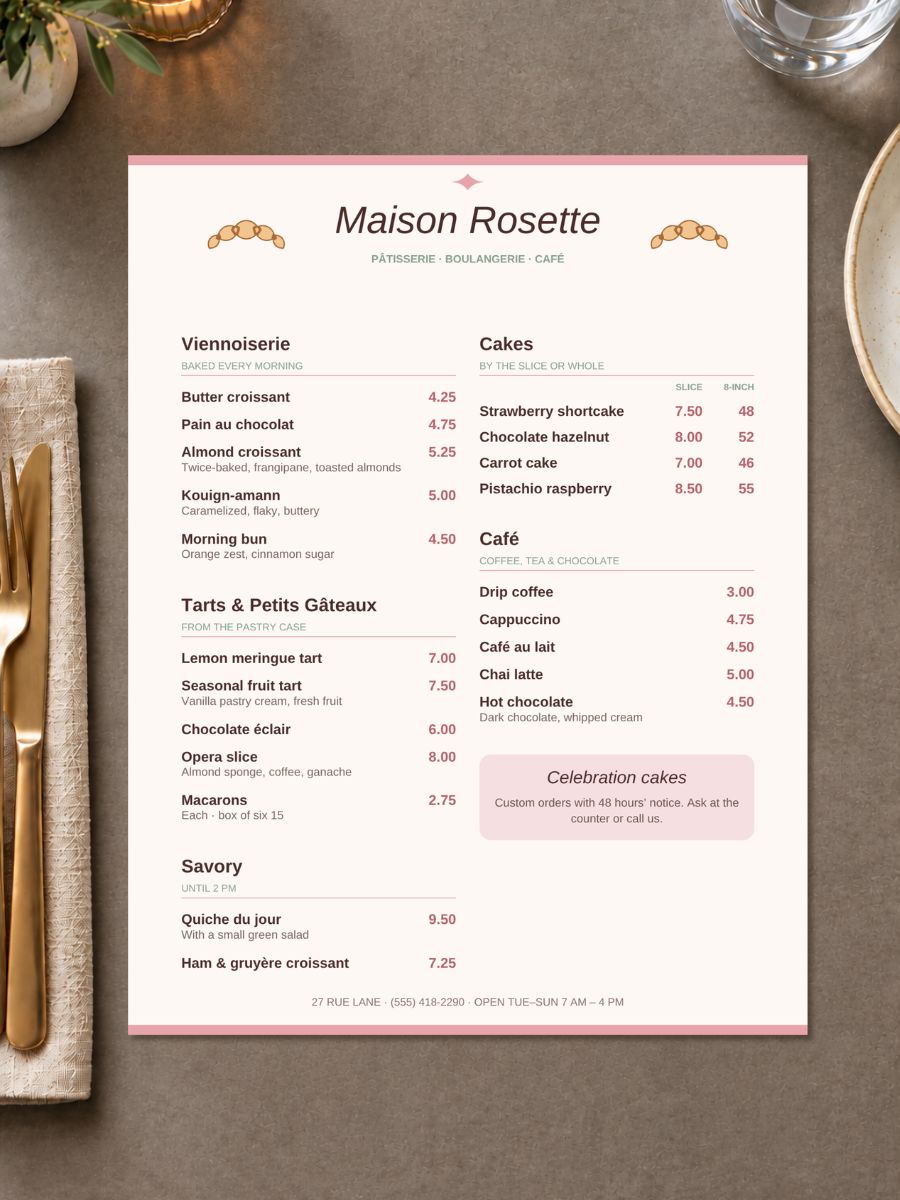
Why it works: Cakes are priced by the slice or whole, and a pastry case section matches what guests see at the counter.
Get this template Free · Opens in Canva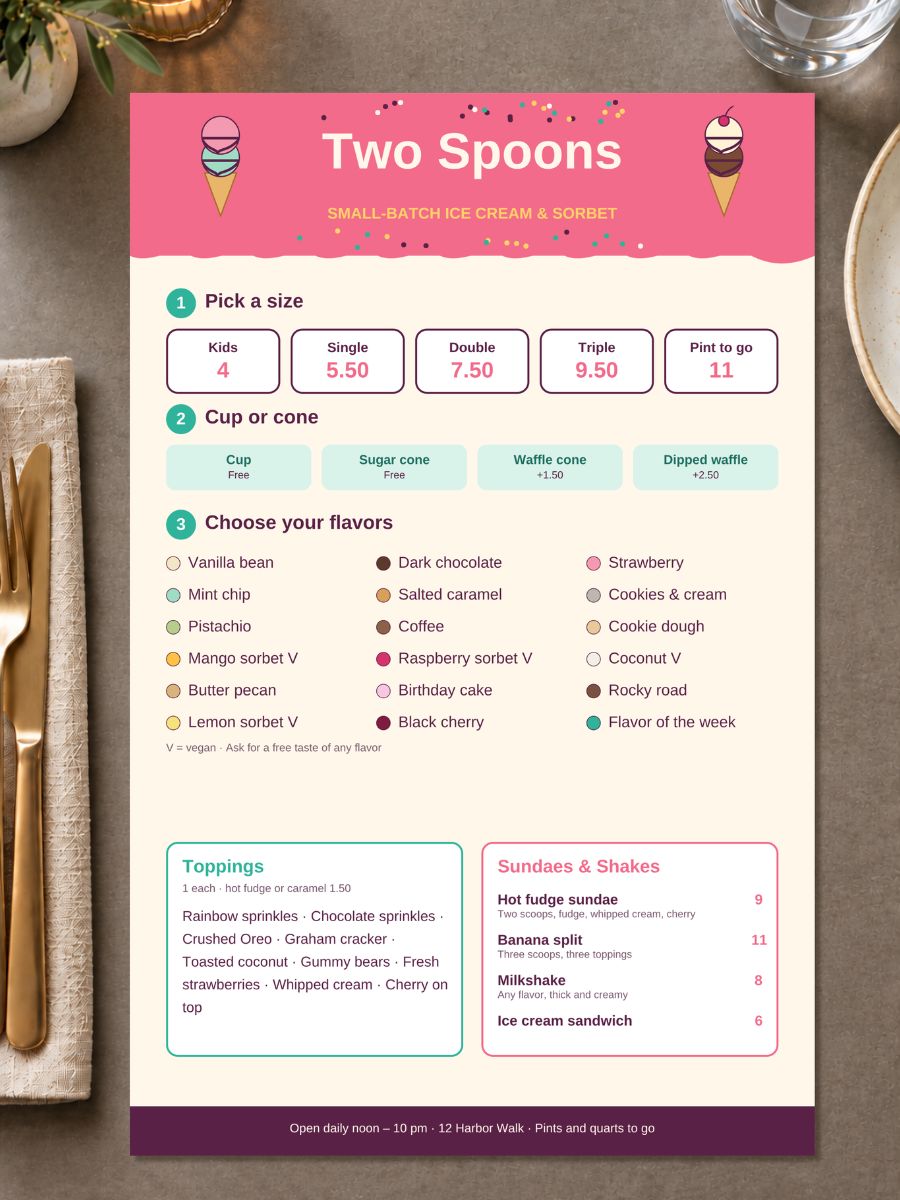
Why it works: Three numbered steps, size, cup or cone and flavors, turn a long flavor list into a quick order at the counter.
Get this template Free · Opens in Canva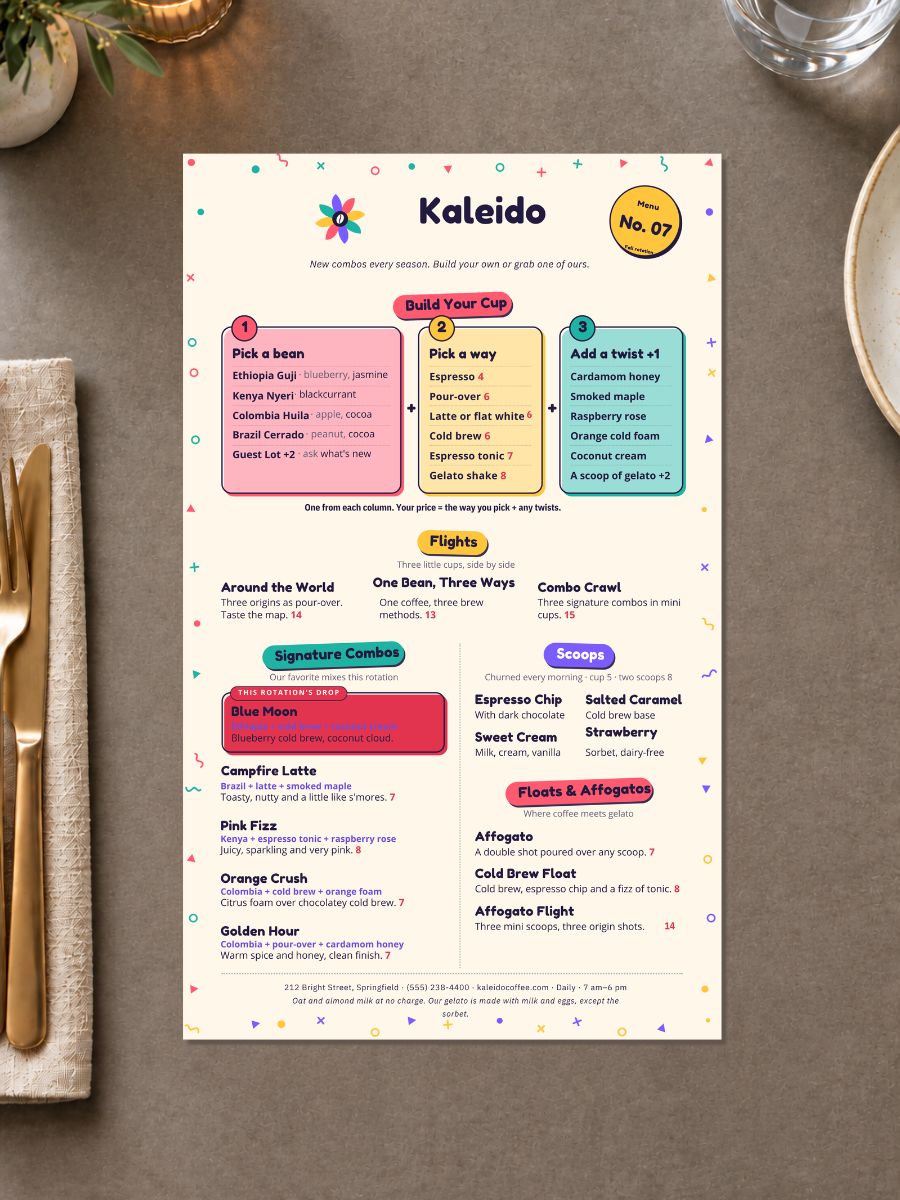
Why it works: Affogatos, floats and gelato flights pair dessert with coffee, the kind of menu that sells in the afternoon.
Get this template Free · Opens in CanvaThe same packet includes a kids’ menu, coffee shop and brunch menus, and full dinner menus to match, so your dessert card and your main menu share the same look. For the rest of the menu, from layout to sizes and legal requirements, see our complete guide to restaurant menu design, and for the drinks that pair with dessert, our bar menu design guide.
A dessert card, a pâtisserie menu and an ice cream shop poster, plus dinner, drink and kids’ menus. Ready to edit in Canva. No email required.