TABLE OF CONTENT
- About Bemelmans Bar at The Carlyle
- Venue at a Glance
- A New York Icon Since 1947
- Inside Bemelmans Bar: Art, Music & Art Deco Glamour
- The Challenge: Seating for a Landmark Interior
- The Solution: Dark Mahogany Lattice-Back Seating
- Why Dark Mahogany, Tea Rose & Brass Work Here
- Materials & Commercial Performance
- The Bemelmans Bar Experience
Bemelmans Bar at The Carlyle: Luxury Hotel Bar Furniture Case Study

Commercial Seating Inside One of New York's Most Recognizable Hotel Bars
Some hospitality projects begin with a blank room. Bemelmans Bar at The Carlyle presented almost the opposite challenge. Located inside one of Manhattan's most historic luxury hotels, this is a room with decades of established character, recognizable artwork, distinctive materials, live music, and its own place in New York culture.
The Carlyle, A Rosewood Hotel has stood at 35 East 76th Street at Madison Avenue since 1930. Just one block from Central Park, the Art Deco hotel has become closely associated with the understated glamour of Manhattan's Upper East Side. Within it, Bemelmans Bar has developed an identity strong enough to make it a destination independently of the hotel itself.
For Superior Seating, the furniture did not need to reinvent the room. It needed to belong there. A coordinated collection of dark mahogany lattice-back chairs and bar stools, upholstered in New Soho Tea Rose, introduced commercial seating that could complement the bar's historic palette rather than compete with it.
Venue at a Glance
- Venue: Bemelmans Bar at The Carlyle, A Rosewood Hotel
- Venue Type: Luxury Hotel Bar & Live Music Lounge
- Address: 35 East 76th Street, New York, NY 10021
- Neighborhood: Upper East Side, Manhattan
- Hotel Opened: 1930
- Bemelmans Bar: A Carlyle institution since 1947
- Experience: Classic cocktails, bar dining, nightly piano, late-night jazz, and social gatherings
- Interior Style: Historic New York Art Deco
- Design Palette: Dark Mahogany • Tea Rose • Chocolate Brown • Black • Brass • Gold
- Furniture Focus: Coordinated wood restaurant chairs and commercial bar stools with upholstered seats
A New York Icon Since 1947
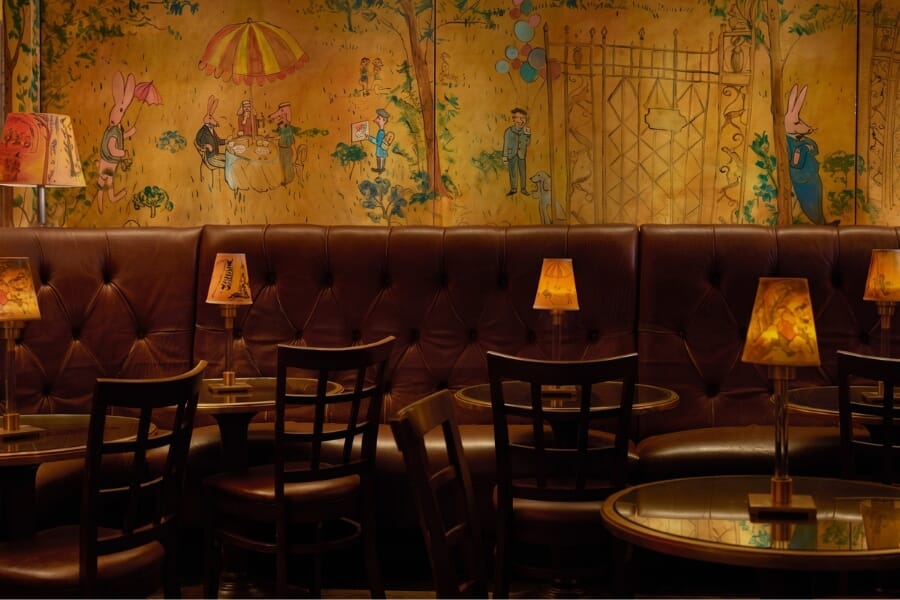
The name Bemelmans comes from Ludwig Bemelmans, the artist and author best known for creating the Madeline children's books. In 1947, Bemelmans was commissioned to paint the large murals covering the walls of the bar. His scenes portray the four seasons in Central Park through the playful visual language that made his illustrations recognizable around the world.
The murals are more than background decoration. The Carlyle identifies them as the only surviving Bemelmans commission open to the public, making the room both a working cocktail bar and an unusual piece of New York art history.
That combination has helped Bemelmans Bar remain relevant across generations. The space is deeply connected to old New York, but it does not operate as a museum. Guests still gather beneath the murals for martinis, conversation, piano music, jazz, and late evenings—using the room in much the same spirit that has defined it for decades.
Inside Bemelmans Bar: Art, Music & Art Deco Glamour
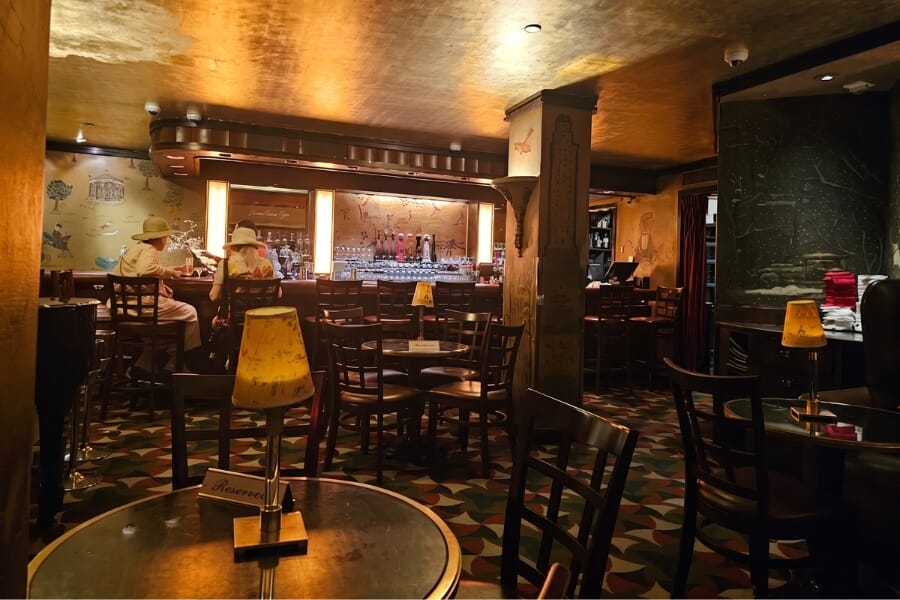
The interior is unusually rich even by luxury-hotel standards. Bemelmans' illustrations wrap around the walls, while chocolate-brown leather banquettes create deep perimeter seating. Nickel-trimmed black-glass tables introduce a cooler reflective surface, and the dramatic black granite bar anchors the room.
Above everything is one of the bar's most distinctive details: a 24-karat gold-leaf ceiling. Rather than making the room feel bright or formal, the gold catches the low lighting and gives the space a warm glow. Dark wood, brown leather, black surfaces, gold, brass, and softly colored upholstery work together to produce an atmosphere that feels luxurious without losing the intimacy of a neighborhood bar.
The room was restored in 2002 by designer Thierry Despont, with its Art Deco identity preserved. That history makes every additional furniture choice especially sensitive. A contemporary chair with an aggressive silhouette or a finish disconnected from the room could immediately feel out of place.
The Challenge: Seating for a Landmark Interior
Furnishing an established historic interior is fundamentally different from furnishing a new restaurant. Bemelmans Bar already had its visual language. The furniture therefore needed to support the room rather than introduce another competing style.
At the same time, this is not simply a preserved historic space. It remains an active hotel bar with regular service, live entertainment, drinks, dining, and guests moving through the room every day. Seating needed the refinement expected in a luxury hotel while still being constructed for commercial hospitality use.
- Respect the existing interior: New seating needed to feel appropriate beside historic murals, dark wood, black glass, leather, brass, and gold.
- Maintain visual continuity: Dining chairs and bar stools needed to share one recognizable design language.
- Support commercial use: Construction had to suit repeated use in an active hotel bar environment.
- Preserve intimacy: Furniture needed enough detail to feel refined without visually overpowering the relatively intimate room.
- Coordinate materials: Wood finish, upholstery, and metal accents all needed to relate naturally to materials already present within Bemelmans Bar.
The Solution: Dark Mahogany Lattice-Back Seating
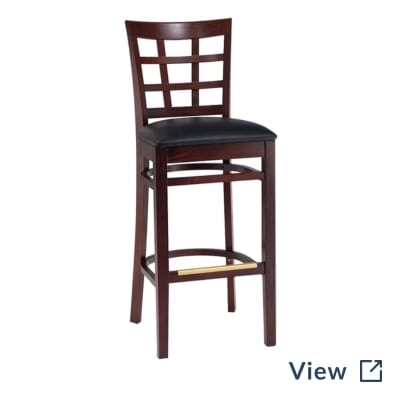
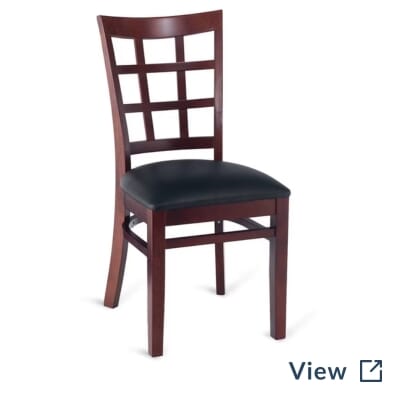
The selected furniture uses a traditional lattice-back silhouette constructed from European beechwood. It is a particularly appropriate profile for Bemelmans Bar because it offers decorative detail without becoming ornate. The geometric wood back gives the chairs their own character while still allowing the murals and surrounding architecture to remain visible.
A Dark Mahogany finish brings the furniture into the room's existing family of deep brown and black surfaces. New Soho Tea Rose upholstery creates a softer contrast on the seat, preventing the collection from becoming too dark and introducing a muted color that feels more residential and intimate than a conventional black commercial vinyl.
Using the same lattice design for both dining chairs and bar stools also creates continuity at different seating heights. Instead of the bar counter and table seating feeling like separate furniture programs, the shared back design, finish, and upholstery connect them.
Why Dark Mahogany, Tea Rose & Brass Work Here
The strongest aspect of the furniture specification is not any individual color—it is how the three finishes interact with the existing room.
Dark mahogany has enough warmth to sit comfortably beside the chocolate-brown leather banquettes while remaining deep enough to relate to the black granite bar and black-glass tables. It gives the furniture the visual weight appropriate for a historic luxury setting without resorting to decorative carving or oversized profiles.
Tea Rose provides a quieter counterpoint. The muted pink tone introduces color without challenging Bemelmans' murals, where the artwork must remain one of the strongest visual elements. Under the bar's warm lighting, the upholstery becomes another soft layer among brown leather, painted walls, wood, and gold.
On the bar stools, the brass footrest completes the relationship. Rather than appearing as an isolated furniture detail, brass belongs naturally in a room defined by warm metallic highlights and a gold-leaf ceiling.
It is a useful example of hospitality furniture specification in a historically sensitive interior: instead of asking how to make the chair stand out, the more important question is how to make it feel as though it has always belonged there.
Materials & Commercial Performance
Behind the traditional appearance is commercial wood seating designed for hospitality applications. Both pieces use solid European beechwood frames and mortise-and-tenon construction, combining a classic furniture-making method with reinforcement appropriate for restaurant and bar use.
- European Beechwood Frames: Solid hardwood construction gives the chairs and stools the weight and character appropriate for an upscale interior.
- Mortise-and-Tenon Joinery: Commercial joinery supports repeated hospitality use while maintaining a clean wood-frame appearance.
- Lattice-Back Design: The geometric back adds detail without creating an overly heavy or upholstered silhouette.
- Custom Upholstered Seats: Tea Rose upholstery softens the dark mahogany frames and coordinates with the existing palette.
- Brass Footrest: The bar-stool specification adds a functional metal surface while connecting visually with the room's warm metallic finishes.
- Nylon Floor Glides: Floor glides help protect finished flooring and allow furniture to move more smoothly during service.
- Fully Assembled Construction: The seating is designed for commercial indoor restaurant and hospitality use.
Furnishing a hotel bar, lounge, or historically inspired restaurant? Explore Commercial Bar Stools and Restaurant Chairs.
The Bemelmans Bar Experience
Our furniture selections contribute to the unmatched atmosphere that has made Bemelmans Bar a New York City institution:
"Situated within the esteemed confines of The Carlyle Hotel, Bemelmans Bar is not only a treasured establishment in its own right but also a jewel within the crown of this iconic luxury hotel. Nestled within the illustrious Upper East Side, The Carlyle has long been synonymous with sophistication, attracting discerning clientele from around the world — beckoned by the allure of Bemelmans Bar, an oasis of charm and artistic brilliance."
Creating Seating for a Distinctive Hospitality Interior?
Superior Seating helps hotels, cocktail bars, restaurants, lounges, private clubs, and other hospitality venues customize commercial chairs and bar stools through wood finishes, upholstery, COM materials, seat options, and metal details. The Bemelmans Bar project demonstrates how a coordinated furniture specification can respond to an established interior rather than compete with it.
Contact us for a consultation — or submit a quote online.

Luxury Hospitality Furniture:
Designed Around the Interior
Superior Seating helps hotels, cocktail bars, restaurants, lounges, and other hospitality venues coordinate commercial seating with the architecture, atmosphere, materials, and identity of the space.